

Commercial Plumber Port St Lucie – Rapid Response Business Plumbing Service
Commercial plumbing systems require professional expertise when they fail. Our commercial plumber Port St Lucie service offer a rapid response, because businesses can lose an estimated $3,200 per day on average when commercial plumbing systems fail, making professional maintenance and rapid response critical for maintaining operations and business safety. Hiring a qualified commercial plumber Port St Lucie is key to ensuring your business runs smoothly.
Key Takeaways:
- Commercial plumbing requires Florida DBPR contractor licenses with specific endorsements that residential-only plumbers don’t have
- St. Lucie County commercial permits take 72 hours minimum and require licensed contractor signatures on all applications
- Multi-property service contracts reduce emergency call costs by 35-45% compared to individual service calls
- Port St Lucie’s saltwater environment causes 40% faster corrosion in commercial pipe systems
- Finding a skilled commercial plumber Port St Lucie can save your business time and money.
When it comes to maintaining a commercial property in Port St Lucie, having the right commercial plumber Port St Lucie can make all the difference in preventing costly repairs and navigating the commercial plumbing permit processes.
Investing in a commercial plumber Port St Lucie ensures that you have access to timely repairs and maintenance, keeping your business compliant and efficient.
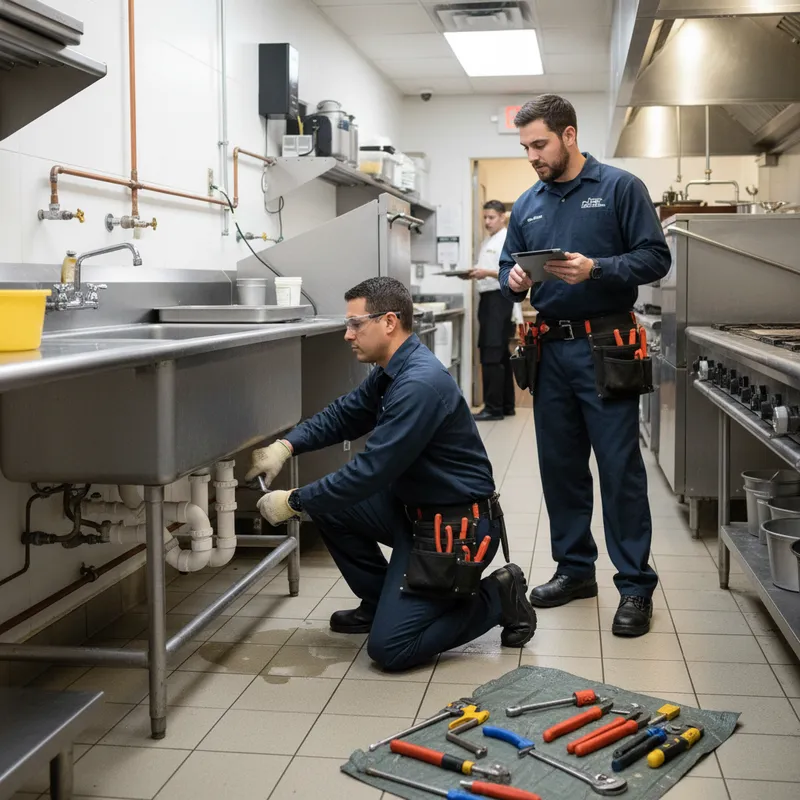
The local landscape of Port St Lucie requires a commercial plumber Port St Lucie who understands the specific plumbing challenges faced by businesses in the area.
What’s Different About Commercial Plumbing in Port St. Lucie?
Commercial plumbing is work performed on business properties, multi-family buildings with four or more units, and any structure requiring commercial-grade systems. This means different licensing, permits, insurance requirements, and liability standards than residential work.
The Florida DBPR plumbing contractor license divides into residential and commercial endorsements. Residential contractors can work on single-family homes, duplexes, and triplexes. Commercial endorsements cover everything else: office buildings, retail spaces, restaurants, medical facilities, and apartment complexes. You can’t legally perform commercial work with a residential-only license.
St. Lucie County commercial permit requirements differ significantly from residential permits. Commercial applications require engineered drawings for systems over certain capacities, fire department approvals for buildings with sprinkler systems, and health department sign-offs for food service establishments. Processing takes 72 hours minimum compared to same-day residential permits.
Insurance requirements jump from $500,000 minimum liability for residential contractors to $1 million minimum for commercial work. Workers’ compensation becomes mandatory for any commercial contractor with employees. Bonding requirements increase proportionally with project values.

Commercial plumbing systems operate under different codes than residential. Water pressure requirements, backflow prevention, grease trap regulations, and accessibility compliance add layers of complexity that residential plumbers never encounter. These systems require specialized knowledge of commercial fixtures, high-capacity water heaters, and industrial-grade drain systems.
Choosing a commercial plumber Port St Lucie who is well-versed in local regulations will ensure your business stays on the right side of compliance.

A reliable commercial plumber Port St Lucie will help you navigate the unique challenges posed by the coastal environment, ensuring your plumbing systems are up to par.
Commercial Plumbing Services Available on the Treasure Coast
Treasure Coast commercial plumbers provide specific service categories for business properties. Service categories vary by building type, each with distinct permit requirements and emergency response protocols.
| Property Type | Primary Services | Permit Requirements |
|---|---|---|
| Office Buildings | Water heater replacement, fixture upgrades, pipe repairs | Commercial permits for capacity over 40 gallons |
| Retail Spaces | Drain cleaning, restroom maintenance, emergency repairs | ADA compliance for public restroom modifications |
| Restaurants | Grease trap cleaning, commercial dishwasher lines, floor drains | Health department approval for all food service plumbing |
| Medical Facilities | Specialized fixtures, medical gas lines, infection control drains | State health facility licensing for medical equipment |
| Multi-Family Properties | Unit turnovers, common area repairs, water line maintenance | Residential permits for individual units, commercial for common areas |
| Industrial Properties | High-pressure systems, chemical-resistant piping, waste management | Environmental permits for industrial waste discharge |
Restaurant grease trap cleaning requires monthly service under St. Lucie County health codes. Failure to maintain proper documentation results in health department violations that can shut down operations.
Emergency response priorities differ by property type. Medical facilities get immediate response for any water system failure that affects patient care. Restaurants with health department deadlines take priority over office buildings. Multi-family properties balance tenant needs against overall building systems.
The Treasure Coast service area spans from Stuart to Fort Pierce, with different municipal codes applying to each jurisdiction. Martin County commercial permits operate under different timelines than St. Lucie County. Understanding these jurisdictional differences prevents project delays and code violations.
How Do Property Manager Plumbing Contracts Work?
Property manager contracts include documentation, invoicing, and multi-property scheduling arrangements. The contract process follows specific steps that protect both parties and establish clear service expectations.
- Initial property assessment covers each building’s plumbing systems, age, and maintenance history. Contractors inspect water lines, drain systems, fixtures, and water heaters to identify potential issues before they become emergencies. This assessment forms the baseline for ongoing service planning.
- Service level agreements define emergency response times, scheduled maintenance intervals, and communication protocols. Standard property management contracts include 2-hour emergency response guarantees with penalty clauses. Non-emergency work gets scheduled during business hours with advance tenant notification.
- Emergency versus scheduled pricing separates crisis response from routine maintenance. Emergency calls typically cost 40-50% more than scheduled work due to after-hours labor and immediate response requirements. Contracts often include reduced emergency rates in exchange for guaranteed service volume.
- Invoicing cycles match property management accounting periods, usually monthly with detailed service breakdowns. Invoices include property addresses, work performed, materials used, and permit numbers where applicable. This documentation satisfies owner reporting requirements and insurance claims.
- Tenant communication protocols establish who contacts tenants about service interruptions and repair schedules. Most contracts assign this responsibility to property managers to maintain consistent communication and protect tenant relationships. Contractors provide technical details while managers handle tenant relations.
Multi-property service arrangements often include volume discounts for properties within the same management company. Contractors can schedule work efficiently across multiple buildings, reducing travel time and mobilization costs. These savings get passed to property managers through reduced per-call pricing.
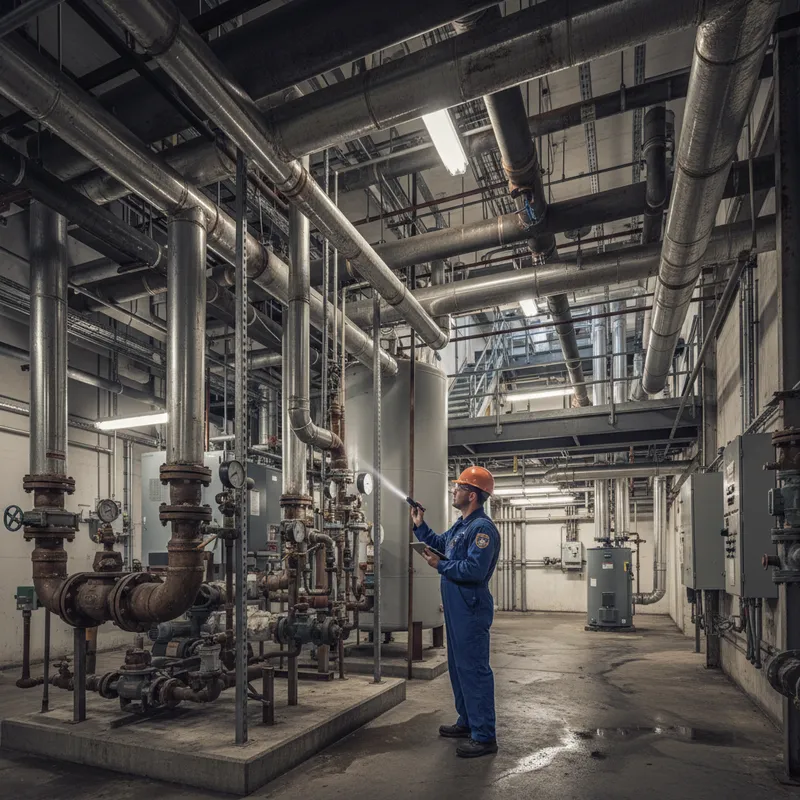
What Commercial Permits Do You Need in St. Lucie County?
St. Lucie County requires specific commercial permits for different plumbing work types. Permit requirements vary by project scope, building occupancy, and system capacity.
- New construction permits cover all plumbing installation in new commercial buildings. Applications require engineered drawings, fixture schedules, and water capacity calculations. Processing takes 5-7 business days with plan review fees starting at $200.
- Renovation permits apply to plumbing modifications in existing commercial buildings. Scope determines whether full plan review is required or if over-the-counter permits suffice. Kitchen and restroom renovations typically require full review due to fixture count changes.
- Emergency repair permits allow immediate work on failed systems with post-completion paperwork. These permits expire in 30 days if permanent permits aren’t filed. Emergency work includes burst pipes, sewer backups, and water heater failures that affect business operations.
- Backflow prevention permits mandate annual testing and certification for commercial properties. Commercial backflow prevention permits cost $125 and require annual testing documentation. Properties with irrigation systems or chemical processing need specialized backflow devices.
- Grease interceptor permits apply to all food service establishments in St. Lucie County. New installations require health department approval before plumbing permits are issued. Replacement interceptors need capacity calculations based on current kitchen equipment and seating.
Florida DBPR plumbing contractor license holders must sign all commercial permit applications. Property managers cannot apply for permits directly unless they hold contractor licenses themselves. This requirement prevents unlicensed work and ensures qualified contractors perform all commercial plumbing.
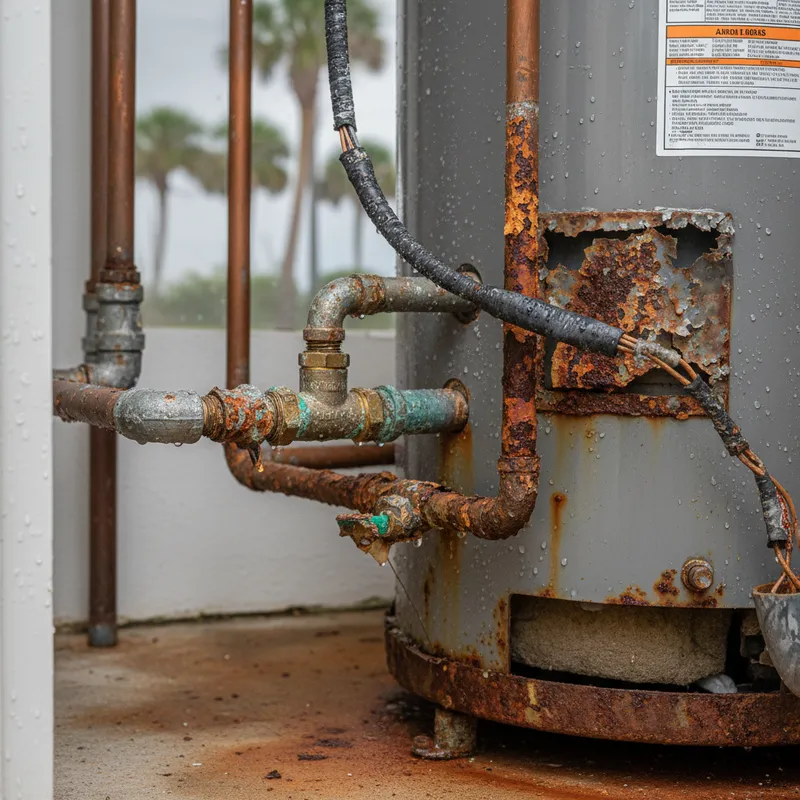
When Do You Need Emergency Commercial Plumbing in PSL?
Commercial plumbing emergencies require 24/7 response with specific documentation for business properties. Emergency scenarios differ from residential calls due to business impact, insurance considerations, and regulatory requirements.
Burst pipes in office buildings affect multiple tenants and require immediate water shutoff to prevent property damage. Insurance companies require detailed documentation of response times, damage mitigation efforts, and repair procedures. Business interruption claims depend on how quickly normal operations resume.
Sewer backups in retail spaces trigger health department notification requirements and potential closure orders. Raw sewage exposure creates liability issues that extend beyond simple cleanup. Professional remediation becomes mandatory for any sewage contact with merchandise or food preparation areas. Sewer backups in commercial kitchens trigger automatic health department notification within 24 hours.
Drain emergencies in restaurants can shut down operations if they affect food preparation or customer areas. Floor drains backing up during peak service hours create immediate health hazards. Emergency drain cleaning takes priority over scheduled maintenance to keep businesses operational.
24/7 emergency plumbing services cost more than scheduled work but prevent greater business losses. A $500 emergency call prevents thousands in lost revenue during peak business hours. Property managers factor these costs into operating budgets and insurance deductibles.
Commercial emergency documentation requirements exceed residential standards. Insurance claims require detailed work orders, material receipts, and photographic evidence of damage. Municipal inspectors may require permits for emergency repairs depending on scope and affected systems.

Frequently Asked Questions
Do commercial plumbers in Port St. Lucie work on weekends?
Most commercial plumbers offer 24/7 emergency service for business properties since downtime costs money. Scheduled commercial work typically happens during business hours Monday through Friday. Emergency calls like burst pipes or sewer backups get same-day response regardless of day or time.
What’s the difference between commercial and residential plumbing rates in PSL?
Commercial plumbing rates run 25-40% higher than residential due to licensing requirements, insurance costs, and permit complexity. Emergency commercial calls typically start at $200-250 compared to $150-175 for residential. However, multi-property contracts often reduce per-call costs significantly.
Can the same plumber handle both my rental properties and my business in Port St. Lucie?
Yes, if they hold proper Florida DBPR licensing for both residential and commercial work. Many contractors specialize in one or the other, but full-service plumbers can handle multi-family rentals and commercial properties under the same service agreement.