

Tankless vs Tank Water Heater Florida: Homeowner’s Guide
Tankless vs tank water heater Florida decisions get complicated fast when you factor in coastal humidity, limited gas lines, and hurricane season power outages that national guides ignore.
Key Takeaways:
- Tank water heaters corrode 40% faster in Florida’s coastal humidity, reducing their 10-year lifespan to 6-8 years
- Tankless units save 15-25% on energy bills in Florida’s hot climate where incoming water temperatures stay above 70°F year-round
- Gas tankless requires natural gas lines that only 30% of Port St. Lucie neighborhoods have, making electric tankless the default choice for most PSL homes
How Does Florida’s Climate Affect Tank vs Tankless Water Heater Performance?
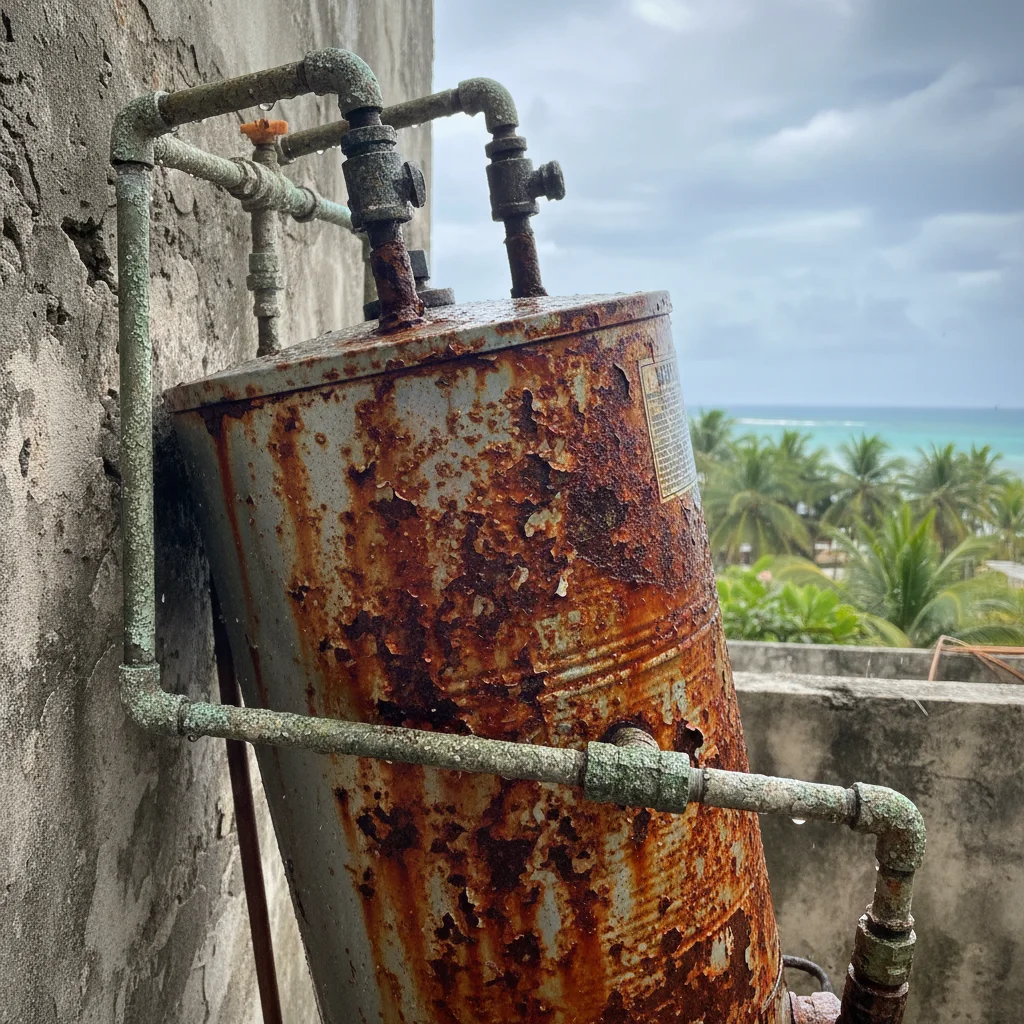
Coastal humidity is the silent killer of tank water heaters in Florida. Coastal humidity is the combination of salt air and year-round moisture that accelerates metal corrosion inside water heater tanks. This means your tank unit will fail years earlier than it would in dry climates like Arizona or Colorado.
The corrosion process starts immediately in Florida homes. Salt particles from ocean air settle on tank exteriors while condensation forms inside tanks due to temperature differentials. Tank water heater lifespan drops to 6-8 years in coastal Florida compared to 10-12 years nationally because the tank interior corrodes through faster.
Tankless units avoid this problem entirely. No storage tank means no metal sitting in humid air collecting salt particles. The heat exchanger components are sealed and only exposed to water flow, not ambient humidity.
Temperature differentials also favor tankless in Florida. Northern climates force water heaters to work harder because incoming water temperatures can drop to 40°F in winter. Florida’s incoming water stays between 72-78°F year-round, reducing the energy load on both systems but giving tankless units a bigger efficiency advantage. Tank units in Florida coastal areas fail 2-3 years earlier than national averages due to humidity-driven corrosion.
Tankless vs Tank Water Heater: Complete Florida Cost Comparison
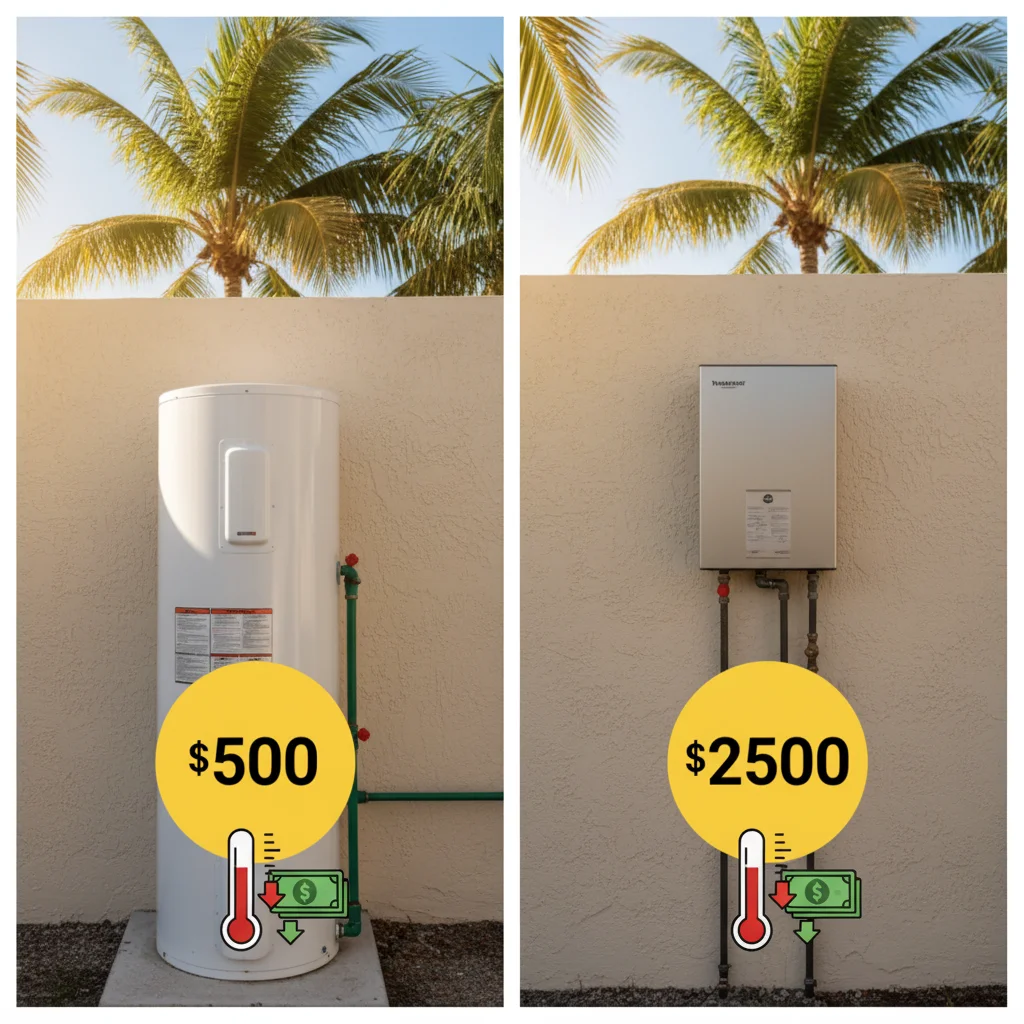
Upfront costs differ significantly between tankless and tank options, but the math changes when you factor in Florida’s climate effects and energy costs.

| Cost Factor | Tank Water Heater | Tankless Water Heater |
|---|---|---|
| Unit Purchase Price | $800-$1,500 | $1,800-$3,500 |
| Installation Labor | $600-$1,200 | $1,200-$2,000 |
| Permits & Electrical | $200-$500 | $400-$800 |
| Total Upfront Cost | $1,800-$3,200 | $3,200-$5,800 |
| Annual Operating Cost | $450-$650 | $320-$480 |
| Repair Frequency | Every 3-4 years | Every 7-10 years |
| 10-Year Total Cost | $7,500-$9,800 | $6,400-$8,600 |
Water heater installation cost varies based on your home’s existing infrastructure. Tankless installation runs $3,200-$5,800 in PSL vs $1,800-$3,200 for tank units, but operating costs favor tankless by $200-400 annually due to Florida’s warm incoming water temperatures.
The repair story matters in Florida’s humid climate. Tank units need anode rod replacement every 2-3 years and element replacement every 4-5 years. Tankless units have fewer moving parts and don’t face the corrosion issues that plague tanks in coastal humidity.
Repair costs add up over time. Tank water heater repairs average $300-$500 per incident, and Florida humidity increases repair frequency. Tankless repairs cost more per incident ($400-$700) but happen half as often. For water heater replacement decisions, the total cost of ownership over 10 years favors tankless despite higher upfront costs.
What Are the Pros and Cons of Tankless Water Heaters in Florida?
Tankless water heaters provide specific advantages in Florida climate, but they’re not perfect for every PSL home situation.
Advantages in Florida:
- Energy savings in hot climate: Tankless units reduce energy consumption by 15-25% in Florida due to incoming water temperatures averaging 72-78°F year-round, requiring less energy to reach target temperatures.
- No tank corrosion issues: Florida’s coastal humidity can’t attack a tank that doesn’t exist, eliminating the primary failure mode for water heaters in humid climates.
- Space savings for Florida homes: Many PSL homes have compact utility areas or garages where a tankless unit’s small footprint provides flexibility for other storage needs.
- Unlimited hot water supply: Large families or homes with multiple bathrooms never run out of hot water, which matters more in Florida where people shower frequently due to heat and humidity.
Disadvantages to consider:
- Higher upfront investment: The $3,200-$5,800 installation cost creates a barrier for homeowners on tight budgets, though energy savings offset this over time.
- Gas line requirements: Gas tankless units need natural gas infrastructure that most PSL neighborhoods lack, forcing expensive electrical upgrades for electric models.
- Power dependency during hurricanes: Both gas and electric tankless units need electricity to operate, leaving you without hot water during Florida’s frequent storm outages when tank units retain heat for hours.
- Electrical upgrade costs: Older PSL homes often need panel upgrades to handle the 240V requirements, adding $1,500-$3,000 to the project cost.
Gas vs Electric Water Heaters: What’s Actually Available in Port St. Lucie?
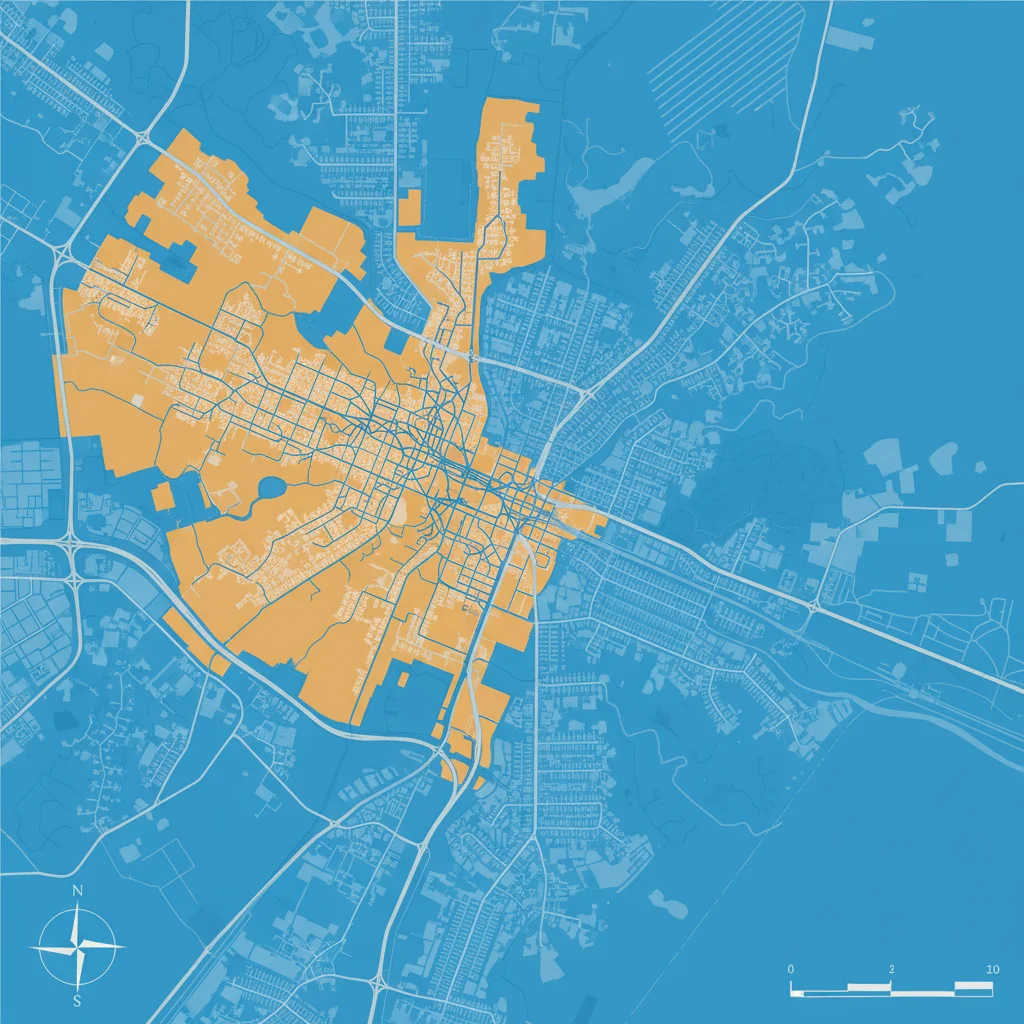
Port St. Lucie neighborhoods have limited natural gas availability, which determines your water heater options before you even start comparing performance or costs.
Only Tradition, St. Lucie West, and parts of Torino have natural gas infrastructure, leaving 70% of PSL homes electric-only. The older sections of PSL around US-1 and most neighborhoods south of Port St. Lucie Boulevard never got gas lines during development.
This matters because gas tankless units outperform electric models in Florida’s climate. Gas units heat water faster and handle multiple simultaneous demands better than electric units. However, if your neighborhood doesn’t have gas lines, running a new gas service costs $3,000-$8,000 depending on distance from the main line.
Electric tankless units work fine for most PSL families, but they need serious electrical power. A whole-house electric tankless unit pulls 60-80 amps, requiring a dedicated 240V circuit and often a panel upgrade in homes built before 1990.
For neighborhoods with gas availability, gas tankless units cost less to operate than electric models. Florida’s warm climate reduces the gas consumption needed to bring incoming water to temperature, making gas the preferred choice where available. Most PSL homes default to electric tankless because gas isn’t an option, not because electric performs better.
Is a Tankless Water Heater Worth It for Florida Homeowners?
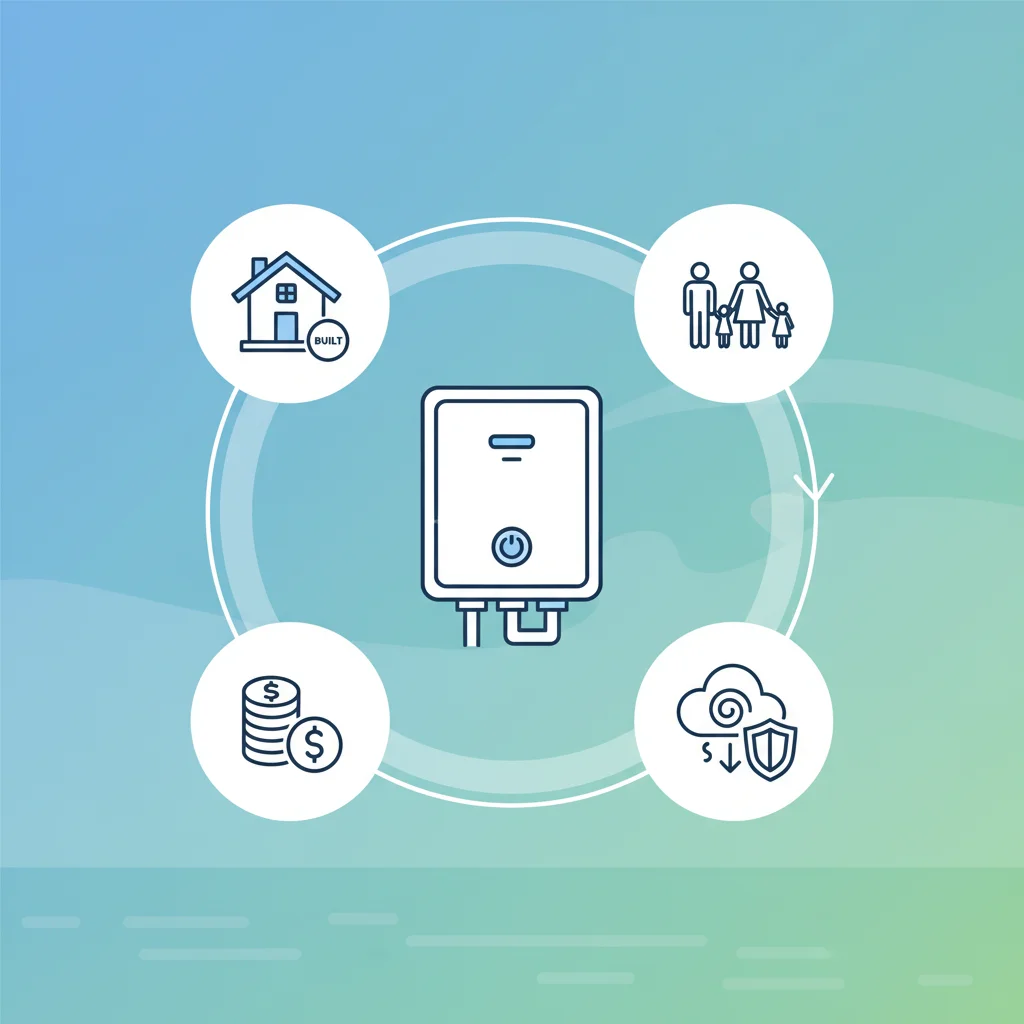
Tankless value depends on specific Florida factors including your home’s age, family size, and electrical infrastructure.
| Home Factor | Choose Tank | Choose Tankless |
|---|---|---|
| Home Age | Pre-1990 homes | Post-2000 homes |
| Family Size | 1-2 people | 3+ people |
| Budget Priority | Low upfront cost | Long-term savings |
| Hurricane Prep | Want stored hot water | Want space efficiency |
| Electrical Panel | 100-amp service | 200-amp service |
| Usage Pattern | Light hot water use | Heavy hot water use |
Treasure Coast plumbers report 60% of customers choose tankless for homes built after 2000, but only 25% for pre-1990 homes due to electrical upgrade requirements. The age of your PSL home determines whether tankless installation stays reasonable or gets expensive fast.
For newer homes with adequate electrical service, tankless makes financial sense. The energy savings in Florida’s climate pay back the higher upfront cost within 5-7 years. For older homes needing electrical upgrades, the payback period stretches to 10-12 years, making tank units more practical.
Family size drives the decision more in Florida than northern climates. Florida families use more hot water due to frequent showers, pool activities, and year-round outdoor work. Large families benefit from tankless units’ unlimited supply, while smaller households don’t need the capacity advantage.
Which type most Treasure Coast plumbers recommend varies by specific situation, but the trend favors tankless for homes built after 2000 with adequate electrical infrastructure. For water heater replacement in older PSL homes, tank units often make more economic sense despite their shorter lifespan in coastal humidity.
What Permits and Licensing Do You Need for Water Heater Work in St. Lucie County?
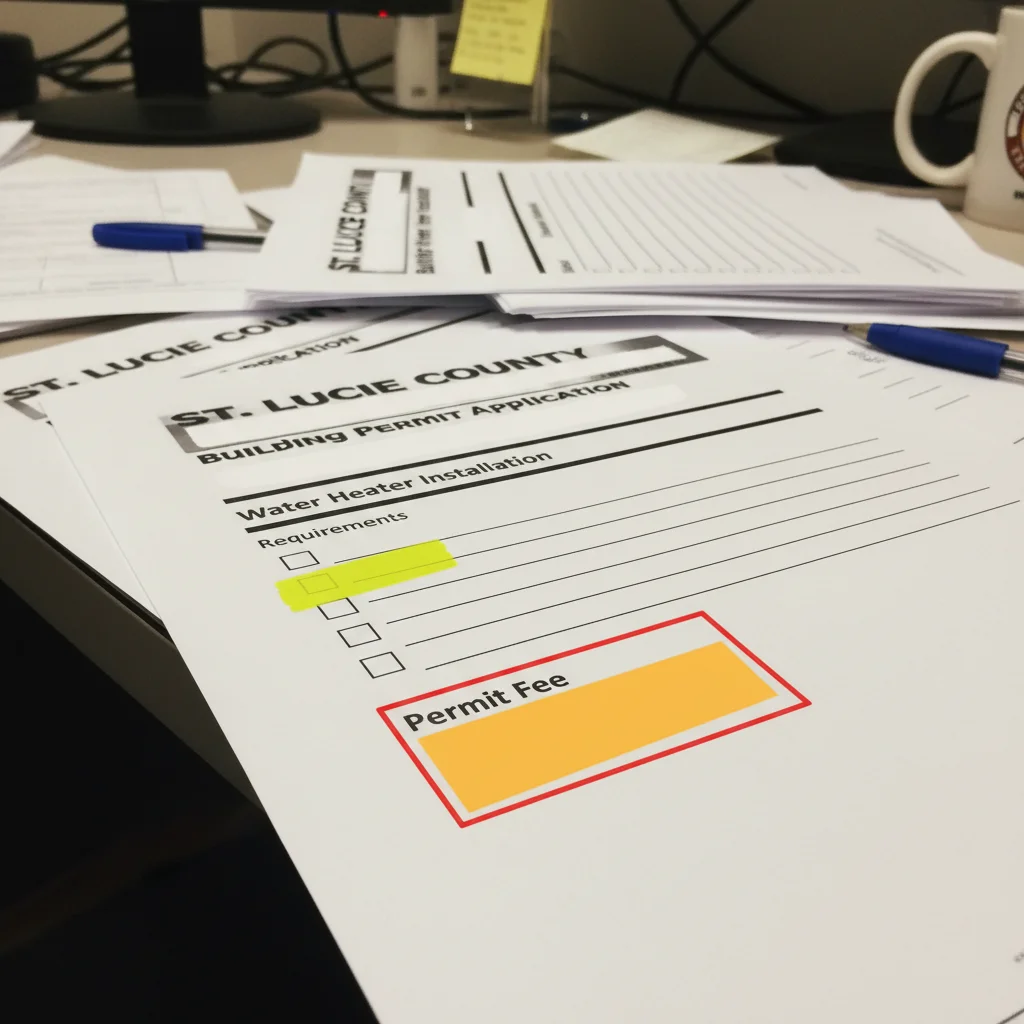
St. Lucie County requires specific permits for water heater installation, and the permit requirements differ between tank and tankless units.
Apply for building permit: St. Lucie County requires building permits for all water heater replacements, available through the county’s online portal or Building Department office on Virginia Avenue. Permit fees range from $75-$150 depending on unit type.
Get electrical permit for tankless: Electric tankless units need a separate electrical permit because they require dedicated 240V circuits and often panel upgrades. This adds $100-$200 to permit costs and requires electrical inspection.
Hire Florida DBPR licensed contractor: All water heater work must be performed by contractors licensed under the Florida Department of Business and Professional Regulation. DIY installation voids manufacturer warranties and violates county code.
Schedule required inspections: Tank installations need one final inspection, while tankless installations need electrical rough-in inspection before drywall and final inspection after completion. Missing inspections can delay occupancy permits.
Submit gas line permits separately: If running new gas lines for gas tankless units, you need additional gas permits and inspections beyond the water heater permit. Gas work requires specialized licensing and cannot be combined with plumbing permits.
Coordinate with HOA requirements: Some PSL neighborhoods require architectural approval for exterior equipment changes, including tankless units mounted on exterior walls. Check your HOA covenants before applying for county permits.
The permitting process takes 2-3 business days for tank replacements and 5-7 business days for tankless installations due to additional electrical reviews. Most licensed contractors handle permit applications as part of their service to ensure compliance with St. Lucie County building codes.
Frequently Asked Questions
How long do tank water heaters last in Florida humidity?
Tank water heaters in Florida’s coastal climate last 6-8 years compared to the national average of 8-12 years. The combination of high humidity and salt air accelerates corrosion of the tank interior and components. Electric units tend to outlast gas units by 1-2 years in Florida conditions.
Can I install a tankless water heater if my PSL home doesn’t have natural gas?
Yes, electric tankless water heaters work well in most PSL homes without natural gas lines. However, your home may need electrical upgrades to handle the 240V requirements, especially in older homes built before 1990. Most Treasure Coast plumbers recommend having your electrical panel evaluated first.
Do tankless water heaters work during Florida power outages?
No, both gas and electric tankless water heaters require electricity to operate their electronic controls and ignition systems. This is a significant consideration for Florida homeowners who face frequent storm-related outages. Tank water heaters retain hot water for several hours after power loss.